EN FR

Modernization and Redesign of Legacy Software in Belgium

Your business relies on software that was developed 10, 15, or 20 years ago. It was the key to your success, but today it poses your greatest operational risk.
Modernization and Redesign of Legacy Software in Belgium

Outdated technologies, fragmented code, and a lack of technical history are holding back your agility. Your teams are wasting time on manual processes, your systems are no longer compatible with modern tools (APIs, CRM), and finding developers capable of maintaining your code is becoming an uphill battle.

Modernizing legacy applications is not an expense—it is a strategic investment to secure your digital core, eliminate technical debt, and restore your competitive advantage.

At VR Agency, a custom software development agency in Belgium, we transform your outdated systems into modern, highly secure, scalable web platforms that are focused on your business performance.

Why choose VR Agency to overhaul your outdated software?

Laravel Expertise and Modern Architectures

We are experts in the Laravel ecosystem, the ideal stack for replacing legacy PHP systems, rigid ERP systems, or outdated Java applications with seamless and secure web solutions. Our assessment of existing technology, each database, and business challenges enables us to prioritize the sustainable modernization and redesign of legacy software, reduce maintenance costs, and effectively address security and performance risks.

Zero vendor lock-in

Unlike software vendors who charge you monthly per-user license fees, the code we write belongs 100% to you. You regain full control of your production equipment. We also ensure secure data transfer, and frequent outages often indicate an urgent need for modernization.

Local Presence and Roots in Belgium

Based in Belgium, we work closely with your technical and operational teams. We understand the challenges of compliance (GDPR) and the realities faced by Belgian small and medium-sized enterprises (SMEs) and mid-sized companies. The deployment is carried out transparently to ensure service continuity, since even a few hours of downtime can disrupt an entire team. We involve users in testing updates, the new interface, and, if applicable, future features such as a mobile app.

Our 4 Steps to Modernize Your Information System

Redesigning enterprise software cannot be done on the fly. To prevent any downtime, we follow a rigorous methodology.

creation-boutique-en-ligne-bruxelles

1. Technical Audit & Code Mapping

We analyze your existing architecture, databases, and outdated dependencies. The goal is to identify technical debt and document your business rules, which are often buried in the original source code.

2. Migration Strategy (Replatforming)

We determine the best approach—a complete overhaul or a phased transition, with the latter generally reducing risks compared to a complete overhaul—based on the chosen approach to modernizing legacy systems, expected changes, the coexistence of old and new systems, and a potential migration to a new environment. We prepare the target architecture as well as the migration roadmap, which is typically based on the Laravel framework due to its robustness and built-in security.

3. Agile Development & Refactoring

Our engineers rewrite and modernize your software application using an engineering approach tailored to the system’s current state, your business needs, and your desired pace of change. We improve performance, resource utilization, and the integration of new, modern API architectures to help your environment evolve seamlessly. We are setting up the cloud infrastructure (AWS, secure European servers) as part of a phased transition, carried out in stages over several months with the old and new environments operating side by side. This target architecture incorporates business continuity from the design phase and paves the way for the adoption of AI and the cloud as part of a modernization of legacy systems.

4. Data Migration & Seamless Deployment

We securely migrate your historical data from your legacy SQL databases to modern systems as part of a performance-oriented engineering effort aimed at modernizing your IT systems. The deployment is carried out transparently to ensure service continuity, minimize downtime, and gradually roll out a new interface or mobile app without any disruption to your internal users and customers. After migration, updates are easier to manage. Test automation also reduces the risk of regression during a redesign.

The technologies we are modernizing

Stack d'origine
(Obsolète / Legacy)
Solution cible
(Moderne & Scalable)
Bénéfice clé pour votre entreprise
Vieux PHP (5.x, 7.x),
ASP.NET, Java ancien
Architecture Laravel moderne Vitesse d'exécution, sécurité renforcée et maintenance simplifiée.
Fichiers Excel, Access,
bases SQL fragmentées
PostgreSQL / MySQL optimisé Centralisation des données, intégrité et requêtes en temps réel.
Logiciels serveurs locaux
(On-premise)
Infrastructure Cloud sécurisée Accessibilité à distance, haute disponibilité et sauvegardes automatiques.
Processus manuels isolésAPI REST / Intégrations Webhooks Interconnexion fluide avec vos outils actuels (CRM, ERP, Comptabilité).

Frequently Asked Questions About Modernizing Legacy Software

Legacy software is an older application—often one that has been in use for more than ten years—that remains essential to a company’s operations but is based on technologies that have become obsolete. These systems are often difficult to maintain, secure, and upgrade, as they may be on their last legs and prone to obsolescence issues related to unsupported components.

The main signs of legacy software are:

  • inability to connect the application to modern APIs, CRMs, or cloud solutions;

  • costly maintenance and increasingly complex bug fixes;

  • difficulty finding developers proficient in older technologies;

  • limited performance and slower business processes;

  • increased cybersecurity and compliance risks.

Your software probably needs to be modernized if you notice several of the following situations:

  • Changes take several weeks or several months;

  • maintenance costs are rising every year;

  • Your application can no longer communicate with your other tools;

  • Users regularly encounter bugs or slow performance, to the point where the software becomes an obstacle to the company's growth;

  • Your infrastructure is no longer compatible with modern cloud technologies;

  • Security and updates are no longer provided.

Technical analysis generally makes it possible to assess the level of technical debt—bearing in mind that technical debt increases the maintenance costs of legacy systems—and to determine the best modernization strategy.

There is no single answer. The choice depends on the state of the software, its architecture, and your objectives; a complete overhaul would involve a more drastic, “big bang” approach.

There are two possible approaches:

Gradual modernization

  • replacing the modules one by one;

  • business continuity without major disruptions;

  • reduction of technical risks;

  • investment spread out over time;

  • a pattern similar to a strangulation pattern.

Complete redesign

  • complete rewrite of the application;

  • new modern architecture;

  • optimal performance and safety;

  • often requires a significant financial investment;

  • Recommended when the software has become too complex or impossible to maintain.

A preliminary study helps determine the right modernization plan and ensures that this transformation yields the best return on investment.

Data migration is carried out using a secure methodology to ensure the integrity of all information.

The main steps are:

  • creation of a staging environment;

  • full database backup;

  • data cleaning and restructuring;

  • gradual migration;

  • automatic checks and manual verifications;

  • Final validation before going live.

This approach significantly reduces the risk of data loss or service interruptions.

The cost of a custom software modernization project in Belgium generally ranges from €30,000 to over €150,000, depending on the complexity of the project. Legacy systems often account for 60 to 80 percent of IT budgets.

The budget depends, in particular, on:

  • the status of the existing software;

  • the quality of the source code;

  • the amount of data to be migrated;

  • the number of users;

  • features to retain or develop;

  • integrations with an ERP, a CRM, an e-commerce platform, or third-party services;

  • safety and compliance requirements.

Each project undergoes a technical audit to establish an accurate budget and help the IT department define the scope of the investment.

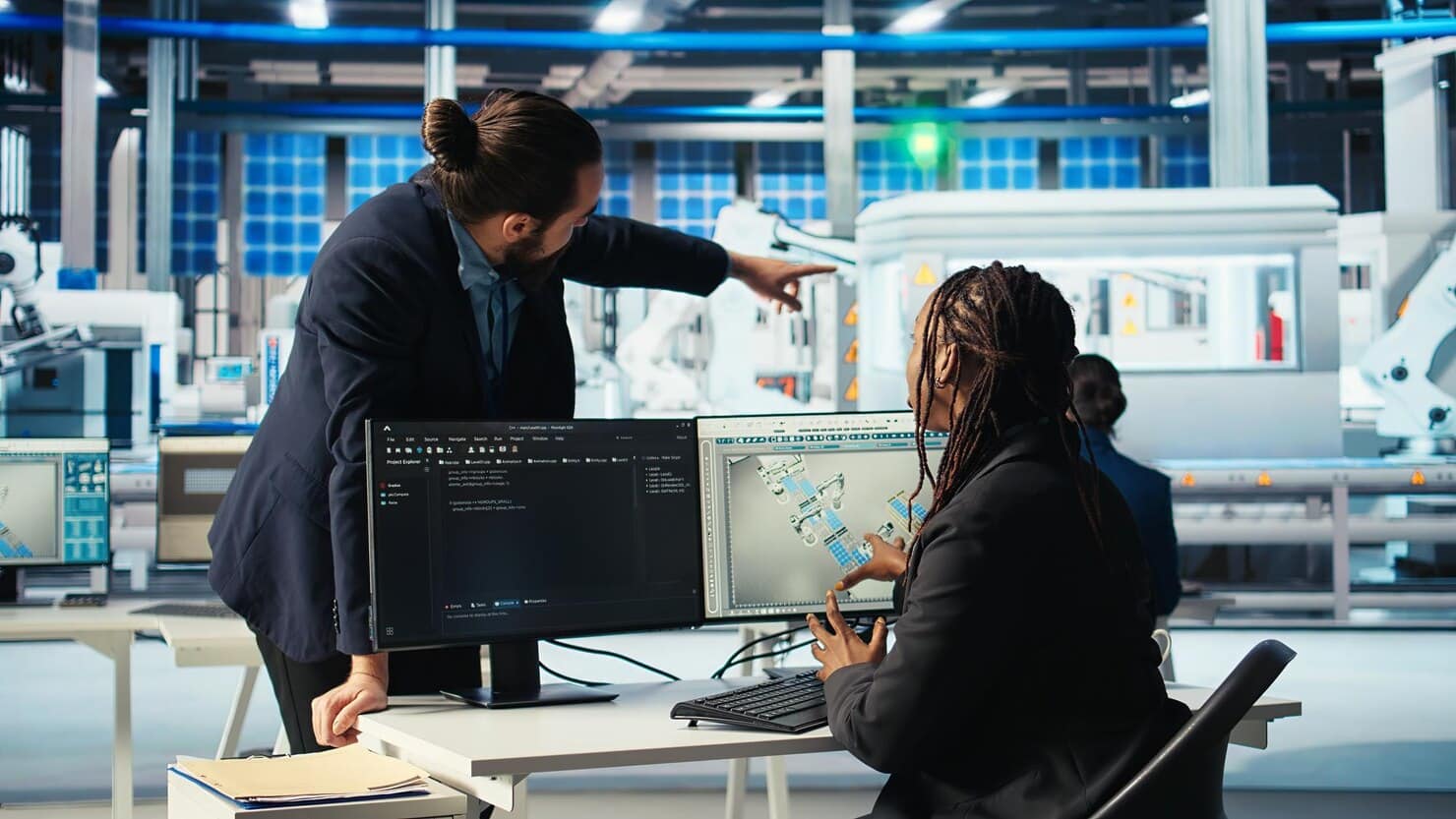
Laravel is one of the most widely used PHP frameworks for developing and modernizing business applications, ERP systems, CRM systems, SaaS platforms, and custom software.

Its main advantages are:

  • advanced protection against major web vulnerabilities;

  • clean and scalable architecture;

  • faster development of new features;

  • Excellent compatibility with APIs and cloud services;

  • simplified maintenance thanks to a standardized structure;

  • a strong community that ensures the technology's long-term viability.

Laravel lets you build high-performance, secure, and easily scalable applications.

Modernizing software can lead to lasting improvements in a company's performance.

The main benefits are:

  • reduced maintenance costs;

  • improved IT security;

  • improved performance;

  • better user experience;

  • compatibility with modern technologies;

  • business process automation;

  • easier integration with other software;

  • greater scalability to support the company's growth.

The duration depends on the complexity of the existing system.

For reference:

  • technical audit: 1 to 3 weeks;

  • partial modernization: 2 to 6 months;

  • Complete overhaul of business software: 6 to 18 months.

A detailed roadmap is developed after analyzing your existing architecture, as the timeline remains a critical factor in project management.

Yes. In most cases, a phased modernization allows the software to remain operational throughout the project, while ensuring a controlled evolution of the system.

This approach offers several advantages:

  • business continuity;

  • risk reduction;

  • gradual migration of users;

  • phased deployment;

  • You can go back if necessary.

Today, this is the preferred strategy for companies that cannot afford production downtime, with a decision-making guide tailored to the project’s constraints.

Contact us

Would you like to create a website in Brussels or redesign your current one?

Contact VR Agency for a strategic meeting. We’ll analyze your project and propose a solution tailored to your objectives and budget.

Any questions?

Request a free quote now.

Let's make an appointment.
Let’s meet to bring your project to life!

Whether it’s a quick and convenient videoconference, or directly in our Brussels office, we’ll adapt to your preferences. We’re out and about in Brussels every day, at your convenience. Use our contact form to tell us when and where.

Google Reviews Logo - VR Agency

Contact - Accueil - English